


NEWSLETTER: 4 UPDATES ABOUT THE NOVIGRAIN PROJECT
Successful Regional Conferences and Demo Tours in Belgium and Hungary
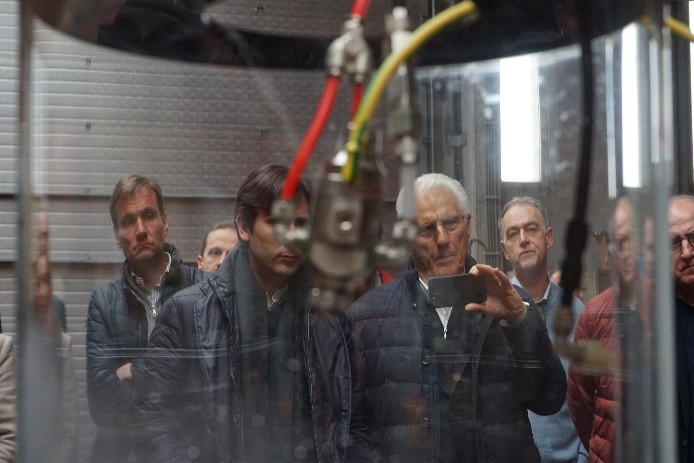
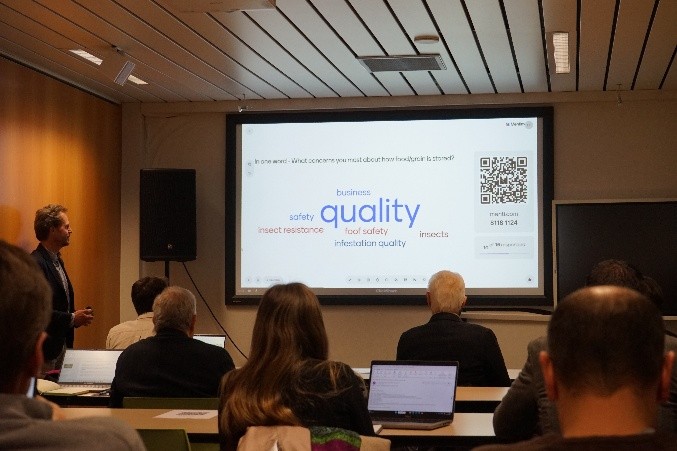
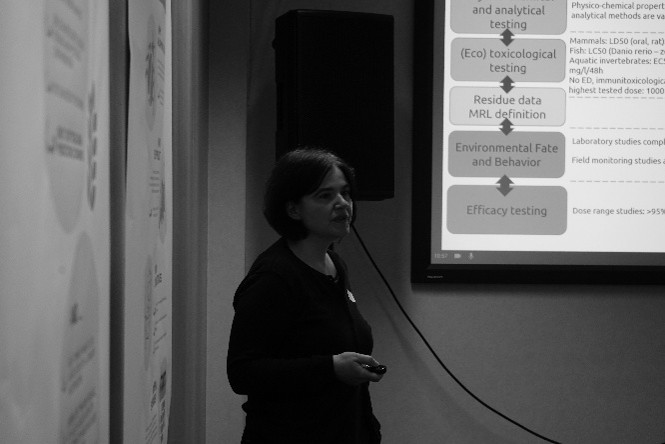
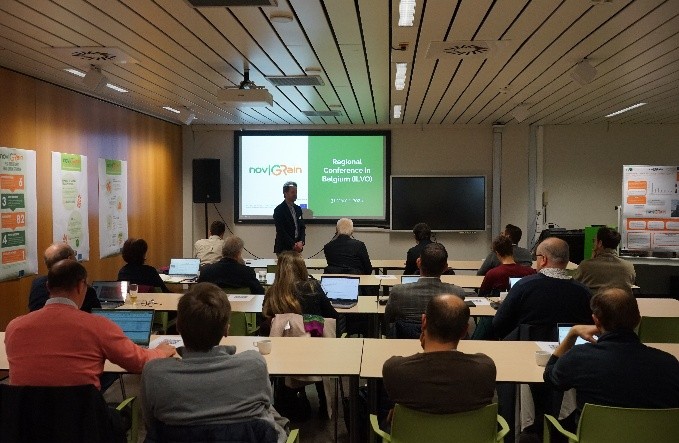
On 31 March and 16 April, the novIGRain project successfully organised two regional conferences and demonstration tours, bringing together project partners, researchers, industry stakeholders and practitioners to share knowledge and showcase project developm
ents.
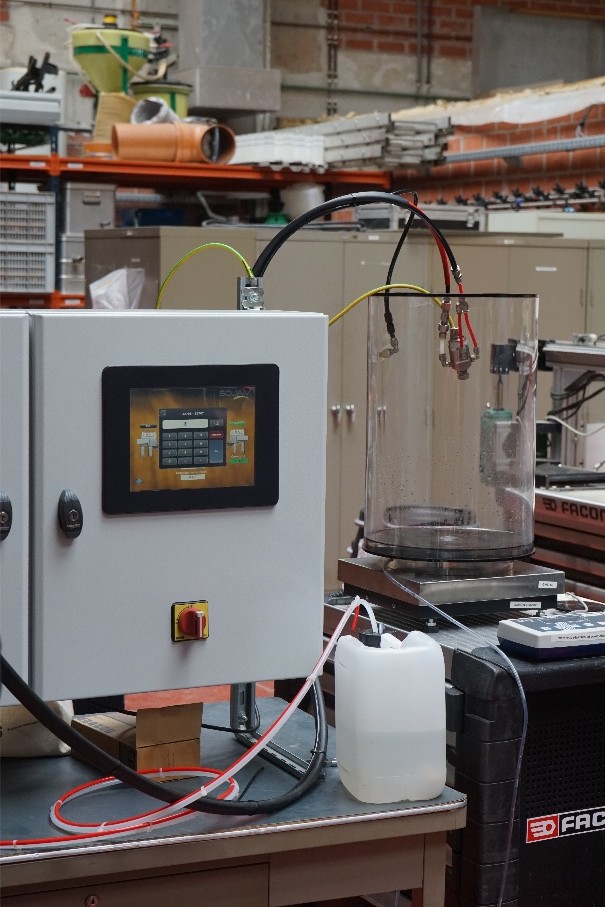
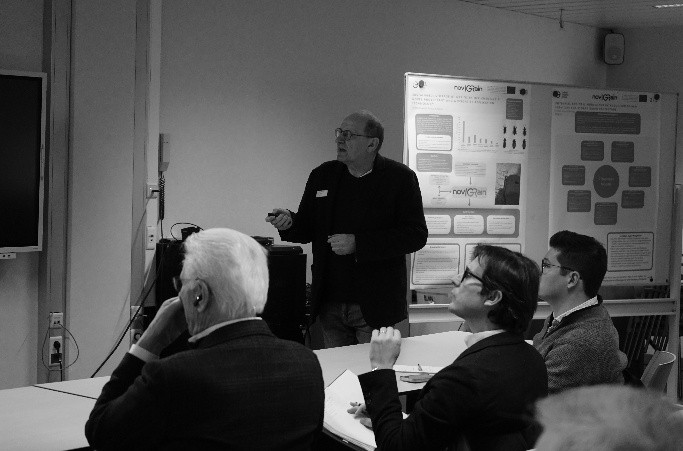
The first event took place in Belgium and was hosted by project partner ILVO. The day started with a series of presentations covering the latest progress in resistance research, product and equipment development, and the project’s impact assessment activities. Following the conference sessions, participants attended a live demonstration of the novIGRain spraying equipment. The programme continued with a guided tour of ILVO’s facilities, where visitors gained insight into ongoing research on spraying equipment certification as well as innovative developments in the automation of spraying technologies using robots and drones. The event provided an excellent opportunity for discussion, networking, and knowledge exchange.
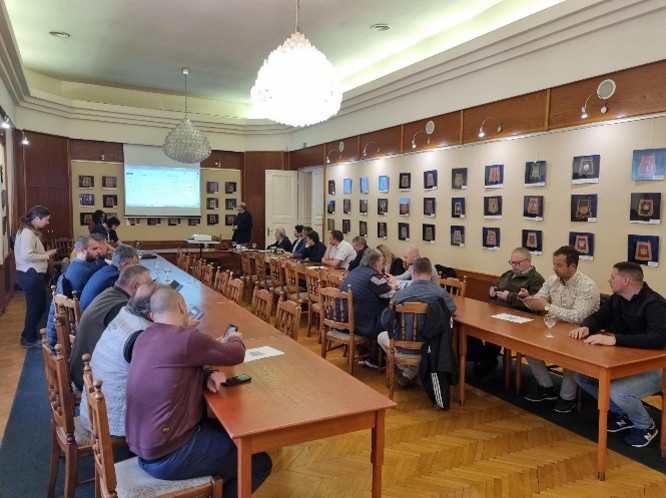
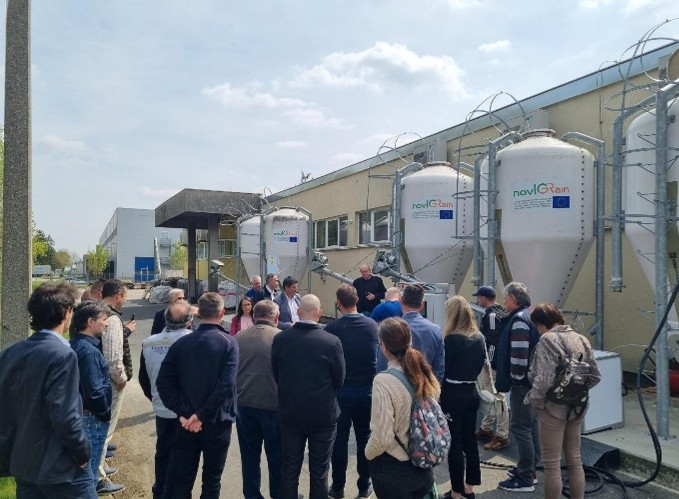
The second regional conference and demo tour was hosted by project partner Bábolna Bio in Hungary. After presentations highlighting recent project achievements and activities, participants visited the Bábolna Bio site, where the project’s test silos are located. Visitors were able to observe a demonstration of the spraying equipment operating on a test conveyor belt, offering valuable insight into its practical application. The event once again fostered productive discussions and provided participants with a deeper understanding of the novIGRain solutions and their potential impact on sustainable grain storage and protection.
Unfortunately, the planned regional conference in Cergy (Paris, France) had to be cancelled due to a lower-than-expected number of registrations. Nevertheless, we were pleased to welcome several international participants, including stakeholders from France, at the Belgian event. Their attendance ensured valuable international exchange and contributed to the success of the regional activities.
Overall, the events successfully showcased the progress of the novIGRain project while strengthening collaboration between partners and stakeholders across the agricultural value chain.
Decision supporting tool for grain professionals
Within the novIGRain project, a decision supporting tool is currently being developed to help grain professionals better align their integrated pest management (IPM) strategies with their specific needs.
Users will be able to input key parameters such as their region, storage conditions and products used. Based on this, the tool will provide tailored advice, helping stakeholders take into account factors such as pest pressure, resistance risks and management techniques.
The tool builds on extensive research conducted by the Czech Agrifood Research Centre (CARC) on pest resistance across Europe. This knowledge is translated into an accessible and practical format, enabling better-informed decision-making instead of relying on a “black-box” approach.
Importantly, grain storage operators can still submit samples free of charge and anonymously to be analysed for pest presence and resistance. These results not only support individual operators, but will also be integrated into the tool to continuously improve its recommendations.
Rather than delivering exact figures, the tool focuses on providing clear, user-friendly insights, including the pros and cons of different storage techniques and plant protection products. This will allow stakeholders to make well-supported, sustainable choices in grain storage management.
Wrapping up our impact assessment research
The novIGRain project is reaching an important milestone, as the impact assessment research is being finalised. This includes the ecological impact assessment and SWOT analysis. The economic impact assessment, the new business model analysis and the social impact assessment (social LCA) have already been completed.
The results of the social impact assessment show that social impacts in grain storage are strongly influenced by the broader supply chain. The largest share of social impact (up to 77–87%) originates from grain production and transport, rather than from the new technologies themselves.
At the same time, the study highlights that innovations such as the novIGRain solution can contribute positively when they help reduce grain losses, which in turn lowers overall social impact across the supply chain.
Differences between country scenarios were also observed, with higher risks often linked to agricultural practices, labour conditions and transport structures. Overall, the findings underline the importance of combining technological innovation with sustainable supply chain management.
The results of the new business model analysis complement these findings by highlighting the practical conditions for successful uptake of innovations. The analysis shows that business models closely aligned with existing procurement practices and professional networks are more likely to be adopted and scaled, while more novel approaches often face barriers due to increased coordination complexity. It also emphasises that the feasibility of certain models—particularly decentralised or equipment-based approaches—is highly dependent on local infrastructure, storage systems, and user capabilities. More complex, system-oriented models are considered promising for the future but currently remain limited in applicability due to the need for broader ecosystem alignment. Across all models, reducing adoption barriers through training, clear protocols, and structured support is identified as a key factor for enabling real-world impact.
Want to learn more about social social LCA? Watch the introduction video on our website
Market-Ready Spraying Tool and Promising Progress in Insecticide Testing
Significant progress has been made in the development of a new spraying technique and a novel larvicide for grain storage protection.
The dual-nozzle ULV spraying system, designed to combine both adulticide and larvicide plant protection products, has been fully developed and successfully tested. By targeting the entire life cycle of pest insects, this approach ensures more effective and longer-lasting control. A key advantage of the dual-nozzle system is that it eliminates the need to mix different formulations. This not only guarantees accurate dosing and optimal penetration of active substances, but also avoids potential risks and compatibility issues associated with mixing.In addition, the system operates with completely separate application lines, further enhancing safety and reliability. The equipment is designed for versatility and can be installed across a wide range of setups. It is a portable, user-friendly device that is easy to mount (for example, on a silo or conveyor belt), features adjustable nozzles, and allows for straightforward operation and cleaning.
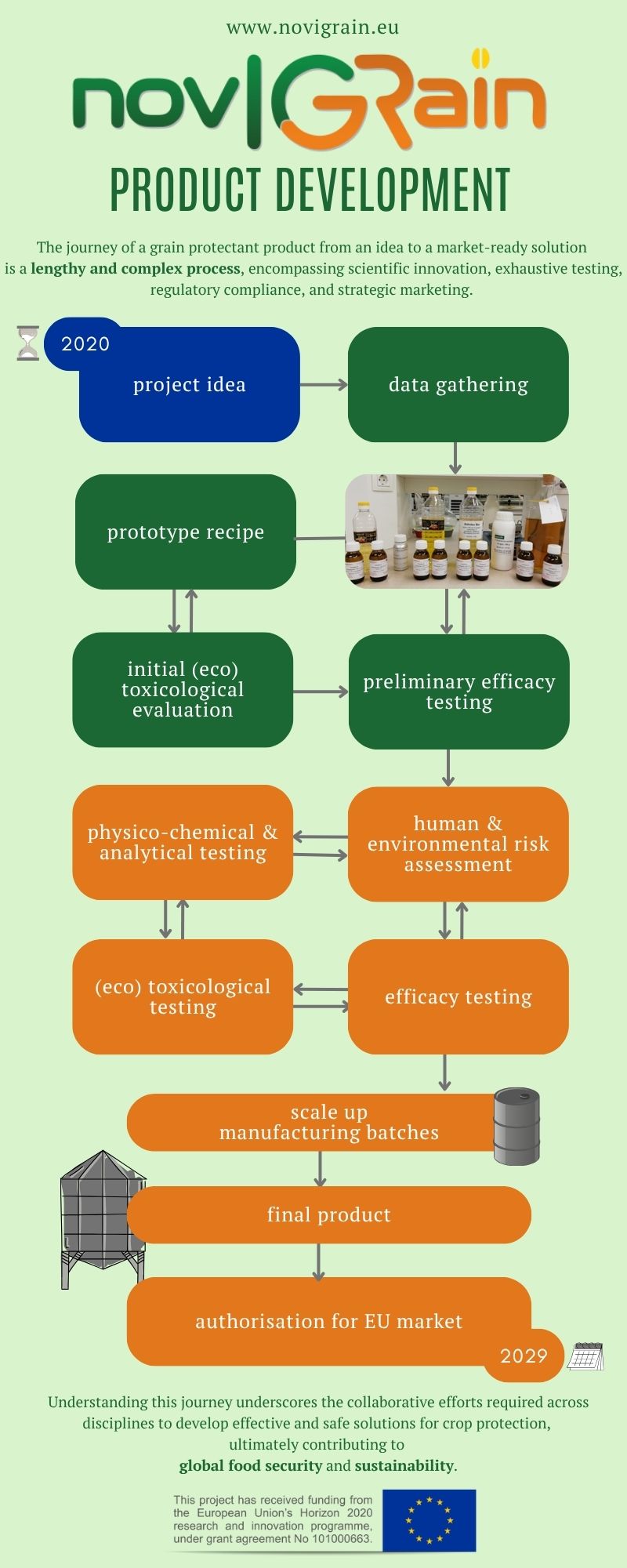
At the same time, the development of the new larvicide is still ongoing. Due to strict European regulatory requirements such as extensive testing, the process from development to market implementation is complex and time-consuming. Curious about this process? Check out our infographic
Stay tuned for more updates via our website and social media channels — and thank you for being part of the novIGRain journey towards more sustainable grain storage!